
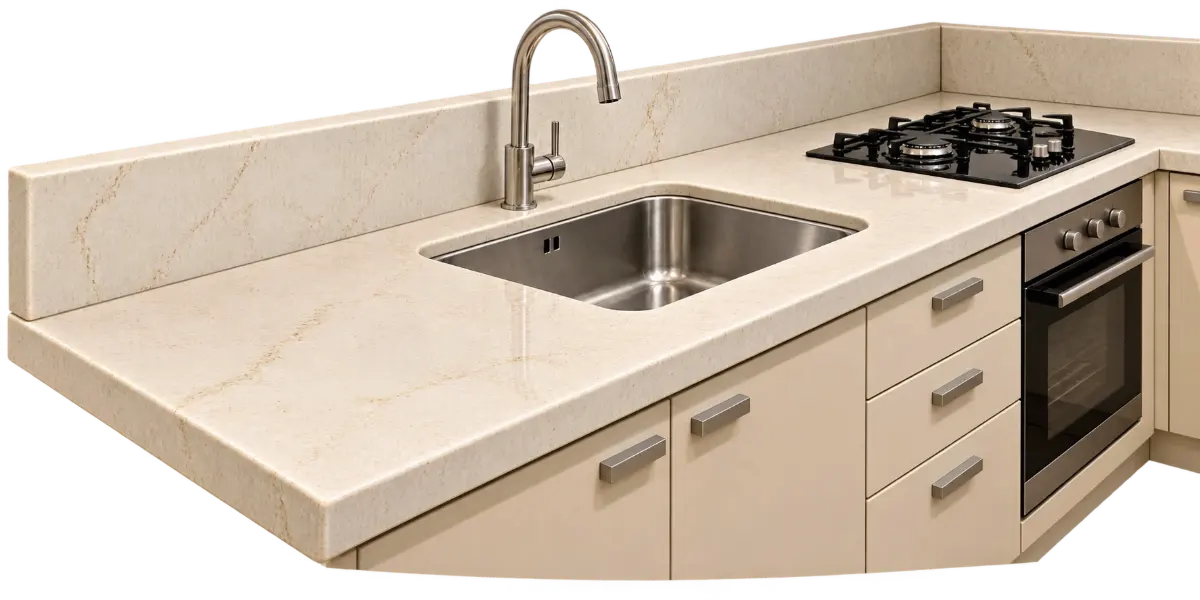
A stone worktop is one of the most expensive surfaces in a home and one of the hardest working. Most damage builds up slowly from everyday habits, and a surprising amount of it can be repaired without replacing the slab.
Know what your worktop is made of
Granite and quartz are hard and fairly forgiving. Marble is softer and reacts to acids, so lemon juice, vinegar and wine can leave dull marks if they sit. Care starts with knowing which one you have.
Wipe spills straight away
Oil, coffee, turmeric and wine are the usual culprits for stains. A quick wipe with a soft cloth and mild soap prevents nearly all of them.
Skip harsh cleaners
Bleach, limescale removers and abrasive pads can strip the sealant and dull the polish. Warm water with a little washing-up liquid is enough for daily cleaning.
Use boards and trivets
Cutting directly on stone blunts knives and can scratch softer surfaces, and a very hot pan can crack a slab or scorch quartz. A board and a trivet cost far less than a repair.
Reseal natural stone
Granite and marble are sealed to stop liquids soaking in. If water no longer beads on the surface and instead darkens the stone, it is time to reseal.
Watch the joints and the sink edge
Gaps in the silicone around the sink or along the wall let water get underneath, which damages the cabinets below. Reseal them as soon as they open up.
Do not ignore a small chip
Chips on edges and around the sink catch on things and get bigger. Filled early, they are quick to repair and almost invisible.