
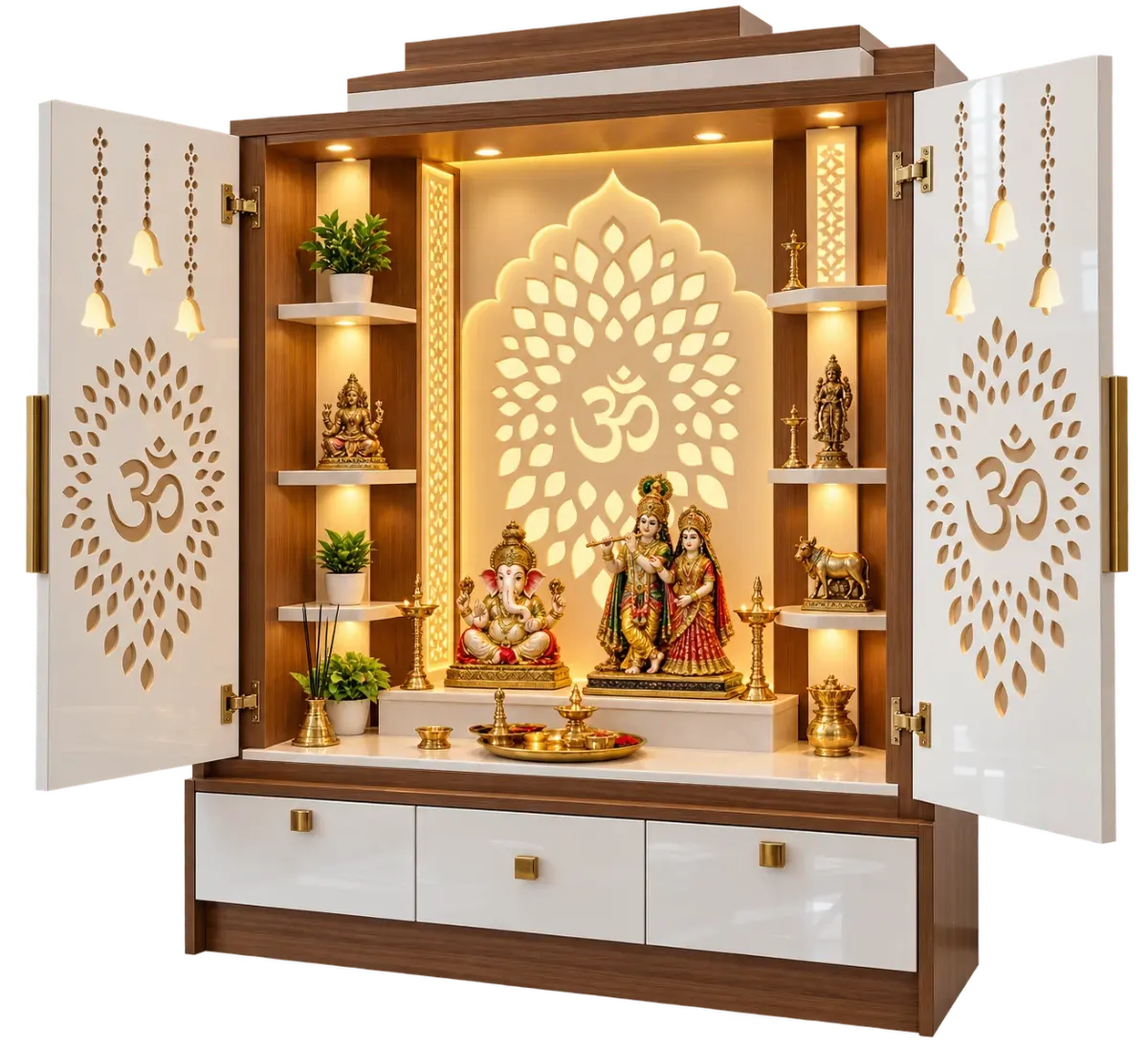
A pooja cabinet is the most personal piece of furniture in a home. In an apartment where space is limited, a well-designed cabinet gives you a calm, dedicated place for prayer without taking over the room.
Choose the place first
A quiet corner of the living or dining room is the most common choice. Many families prefer the north-east of the home with the deities facing east or west, and avoid placing it against a bathroom wall or in a bedroom where possible.
Decide between wall-mounted and floor-standing
A wall-mounted unit saves floor space and suits a small apartment. A floor-standing cabinet gives more room for idols, lamps and storage.
Size it around what it will hold
Measure the idols and frames you already have, then allow space above for a bell and lamp and a shelf in front for offerings.
Pick wood that suits the climate
Solid teak and good quality plywood with veneer cope well with air-conditioned interiors. Avoid cheap board near lamps and incense, as heat damages it quickly.
Plan the lighting
Warm LED strips or small spotlights give a soft glow without producing heat. Ask for the wiring to be concealed and to have its own switch.
Think about fire safety
If you light diyas or incense, use a stone, marble or metal surface where the lamp sits, leave clear space above the flame, and never close the doors while a lamp is burning.
Add ventilation and storage
Carved jali doors let smoke escape and look beautiful. Drawers below keep incense, oil, matches and prayer books neatly out of sight.