A breaker that trips is doing its job: it has detected a fault or an overload and cut the power to protect you. The question is what triggered it. These checks are safe to do yourself and often identify the cause.
Notice which breaker has tripped
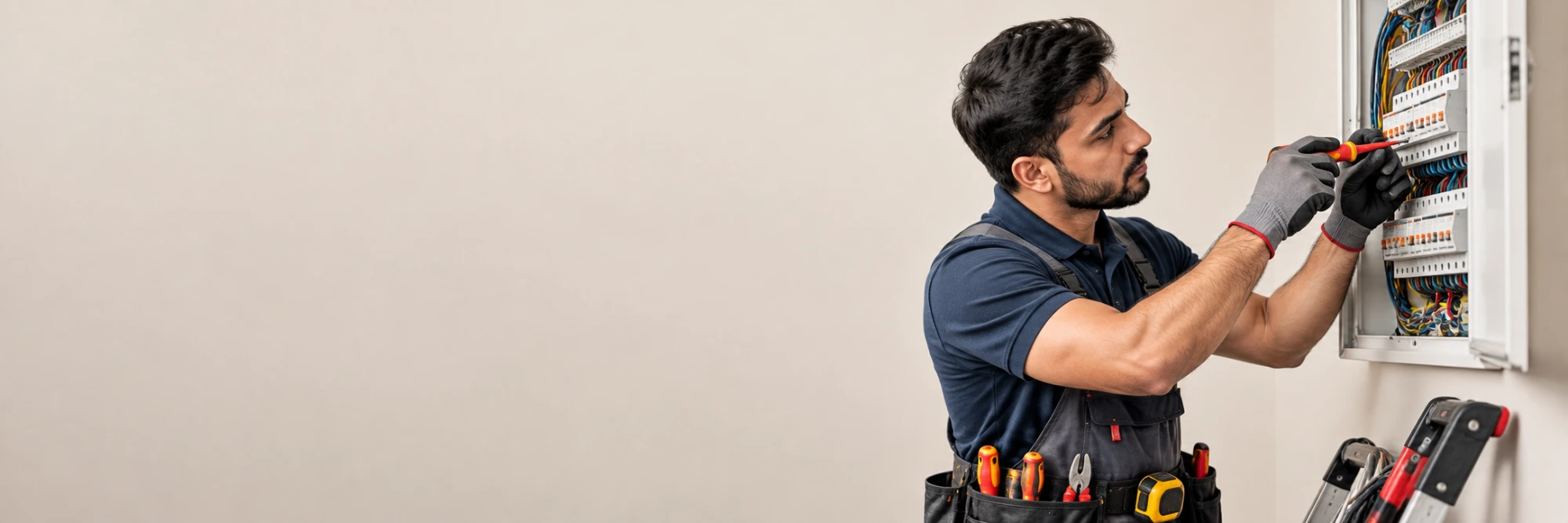
Open the distribution board and see which switch is down. If it is one circuit — kitchen sockets, for example — the problem is on that circuit. If it is the main switch or ELCB, there is likely an earth fault.
Unplug everything on that circuit
Switch off and unplug every appliance on the affected circuit, then reset the breaker. If it stays on, an appliance is the cause.
Plug appliances back in one at a time
Reconnect each appliance in turn. The one that trips the breaker is faulty. Water heaters, washing machines, kettles and irons are frequent culprits.
Think about overload
Running an oven, kettle and microwave from the same sockets can simply be too much for one circuit. Spread heavy appliances across different sockets.
Look for moisture
Outdoor sockets, balcony lights and bathroom fittings can let water in, especially after cleaning or rain. Dampness is a common cause of earth-leakage trips.
Never force a breaker to stay on
Do not tape, wedge or repeatedly reset a breaker that keeps tripping. It is warning you about a real fault.